Circular economy
By recovering critical minerals and metals from end-of-life batteries and scrap, RTM is designed to reduce battery waste and displace demand for newly extracted raw materials.

RTM's proposed model is built on a simple premise: valuable materials should stay in use. Our planned operations are designed around environmental responsibility, safety, and traceability from the outset.
By recovering critical minerals and metals from end-of-life batteries and scrap, RTM is designed to reduce battery waste and displace demand for newly extracted raw materials.
Recycled materials typically carry a lower embodied footprint than primary extraction. RTM aims to contribute to Indonesia's Net Zero and industrial decarbonization ambitions.
Operations are planned around safe hazardous-waste (B3) handling and chain-of-custody traceability — supporting transparency across the material recovery lifecycle.
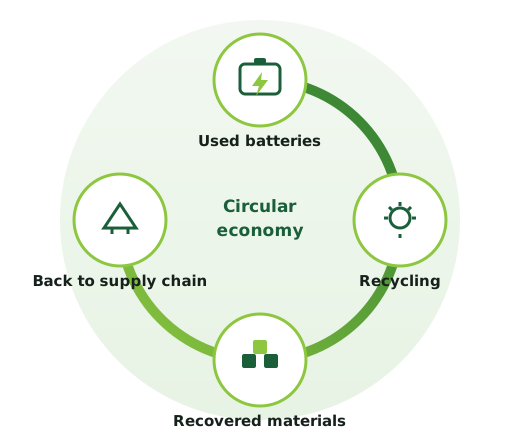
As Indonesia scales electric mobility and energy storage, the volume of end-of-life batteries and production scrap will grow accordingly. RTM's proposed platform is positioned to capture that material and return it to the supply chain.
Battery recycling involves hazardous materials and demands rigorous controls. RTM's planned operations prioritise regulatory alignment and accountability at every stage.
Planned around Indonesia's B3 (Bahan Berbahaya dan Beracun) hazardous-materials framework — with safe intake, storage, discharge, and processing procedures for spent batteries.
Traceability from intake through recovery is intended to document material flow, supporting transparency, reporting, and confidence for supply-chain partners.
We welcome dialogue with partners who share our commitment to circularity, decarbonization, and responsible material recovery.
Get in touch